

Individual and Group Music Therapy
Grounded in evidence. Guided by rhythm. Centered on the person.
What is Music Therapy?
Music therapy is a clinical, evidence-based practice that uses music intentionally to support health, growth, and overall well-being. Sessions are facilitated by a board-certified music therapist (MT-BC) and tailored to each individual’s unique needs and goals.
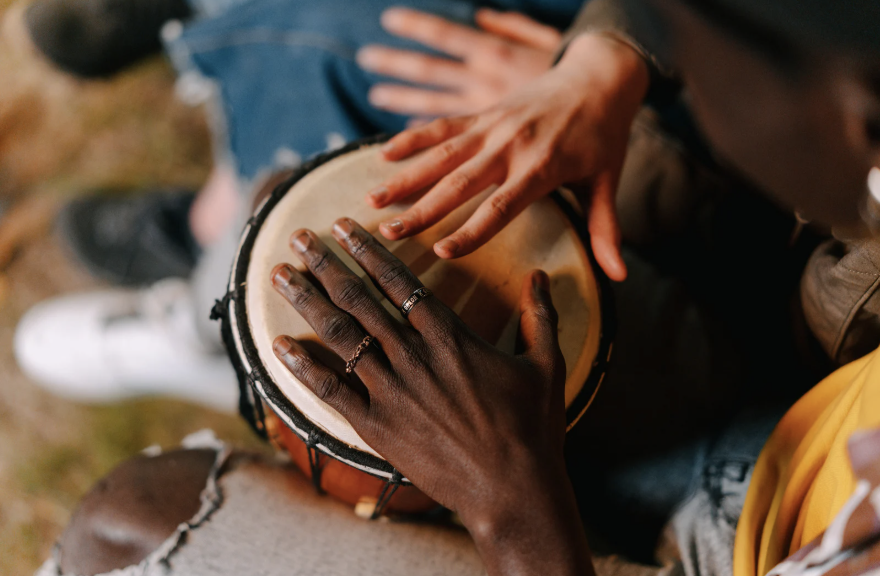
In music therapy sessions, clients and therapist work collaboratively using music—such as listening, playing instruments, singing, songwriting, and rhythmic experiences—to support emotional expression, self-regulation, communication, cognitive functioning, motor skills, and social connection.
Music therapy meets clients where they are, offering a creative and supportive space to process experiences, build skills, and reconnect with a sense of agency and possibility. Music becomes a bridge—between emotion and expression, body and mind, stress and regulation.
Who Music Therapy is For
Music therapy can support individuals across the lifespan and in a variety of settings, including:
✔ Children: supporting emotional expression, regulation, communication, social skills, and coping during medical or life transitions
✔ Adolescents – providing a creative outlet for identity exploration, stress management, emotional processing, and self-expression
✔ Adults – supporting stress reduction, emotional well-being, self-regulation, and personal growth
✔ Individuals in medical settings – offering support for coping with illness, hospitalization, pain, anxiety, and adjustment
✔ Individuals with developmental or neurological differences – supporting communication, motor skills, cognitive engagement, and social connection
✔ Caregivers and families – fostering connection, shared expression, and emotional support during challenging times
Why Music Matters in Therapy
Music is deeply connected to the natural rhythms of the body—our breath, heartbeat, and nervous system. In music therapy, this connection is used intentionally and clinically to support regulation, expression, and healing.
Working with a board-certified music therapist, music becomes a therapeutic tool that can help calm the nervous system, support emotional processing, and strengthen communication and connection. Music therapy offers a creative, supportive space to build skills, process experiences, and reconnect with a sense of agency.
